

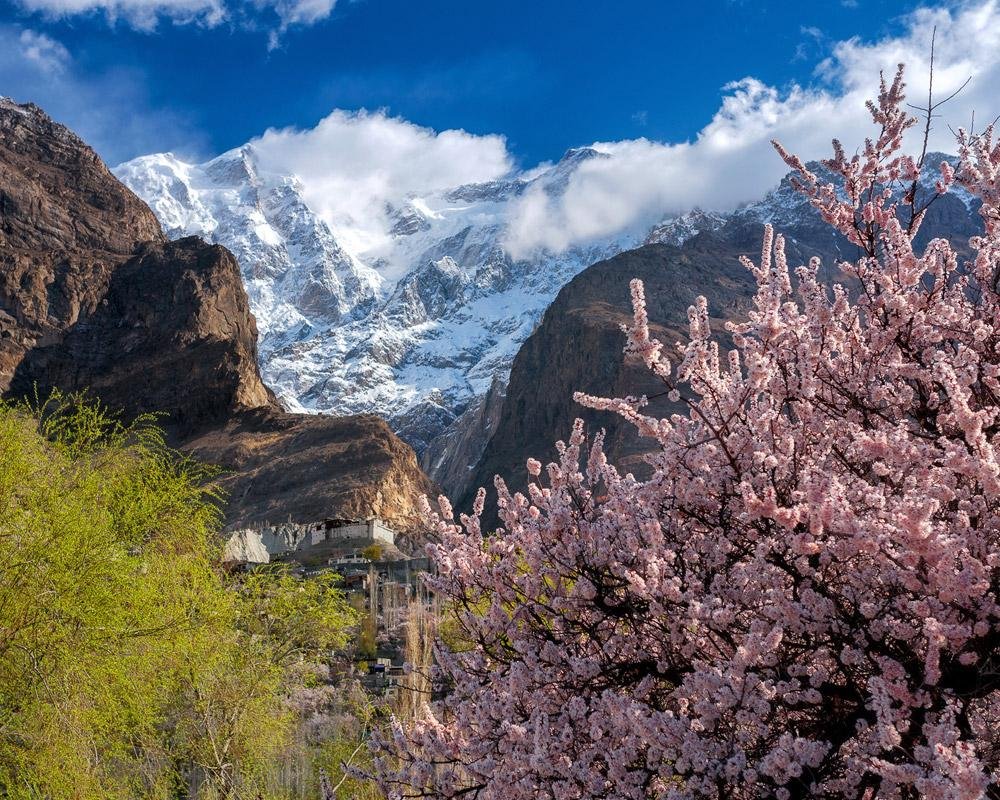
Blossom season — mid-March to mid-April
For about three weeks, Hunza’s terraces turn pink and white — cherry, apricot and almond blossom against snow-covered peaks. It’s the most photographed season of the year, and the shortest: miss the window by ten days and the petals are gone.
Temperatures are cool (roughly 5–18 °C), crowds are smaller than summer, and Khunjerab Pass may still be closed by snow. Book blossom tours by February — our spring departures are the first to sell out every year.
Summer — May to September
Everything is open: Khunjerab Pass, the full Karakoram Highway programme, Babusar Pass for the drive up, and the widest flight schedule of the year. Valleys are green, apricots ripen in July, and daytime temperatures in Karimabad sit around 20–28 °C.
This is peak season, so the famous viewpoints get busy at midday — our guides time fort visits for opening hour and viewpoints for golden hour, which quietly fixes most of that. July and August can bring monsoon rain to the lower KKH; landslides occasionally slow the road, and our operations team reroutes daily when they do.
Autumn — mid-October to mid-November
Our team’s favourite, and the season we feature right now. Poplars and orchards burn gold and rust under the first snow on the peaks, the air turns crisp and clear, and the summer crowds are gone. Hoper Valley and Nagar in late October are, honestly, the most beautiful sight in the North.
Days are shorter and nights cold (around 0–10 °C), so pack for winter evenings. Flights still run, roads are quiet, and hotel rates soften — autumn is also the best-value season for private tours.
Winter — December to February
Hunza in winter is stark and beautiful: frozen Attabad Lake, empty forts, woodsmoke and temperatures of −10 °C and below. It’s also genuinely hard travel — limited flights, icy road sections and many hotels closed.
We run winter only as private trips, for travellers who know what they’re signing up for. If that’s you, it’s unforgettable. If it’s your first northern trip, pick any other season.
Frequently asked questions
What is the best time to visit Hunza Valley?
It depends on the trip you want: cherry and apricot blossom peaks mid-March to mid-April, May to September is green and fully open including Khunjerab Pass, and mid-October to mid-November is golden autumn. Our 5 Days Hunza Valley tour runs year-round from Lahore at PKR 27,500 per person.
How many days are enough for a Hunza trip?
Five days from Lahore covers the Altit and Baltit forts, Attabad Lake, the Passu Cones, Khunjerab Pass and Naltar Valley, with two nights in Hunza itself. Add Skardu as well and the honest answer becomes eight days — the combined Skardu & Hunza tour exists for exactly that.
What is included in Hunza honeymoon tour packages?
Our private honeymoon version of the Hunza trip includes transport in your chosen vehicle, hotel accommodation, daily breakfast and dinner on demand, departing from your desired location. There is no fixed price — tap Contact for Prices on the Private Tours page and choose your vehicle.