

Things to do in Hunza include boating on Attabad Lake, visiting Baltit Fort and Altit Fort, standing under the Passu Cones, driving to Khunjerab Pass, watching the sunrise from Eagle’s Nest, crossing the Hussaini Suspension Bridge, walking the Karimabad bazaar, taking in the Rakaposhi viewpoint, and walking around Borith Lake near Gulmit. Most of it fits into a 5-day trip, and the best time is May to October.
Things to do in Hunza are all about doing, not just looking. Hunza Valley, in Gilgit-Baltistan, is one of the greenest valleys in the north, and its best experiences are out in the open: on a lake, on a fort roof, on a suspension bridge, or on the road to the China border. This guide covers the 10 things to do in Hunza we take our groups to, in the order most travellers do them. If you want the places themselves first, read our guide to the places to visit in Hunza.
Things to do in Hunza: our top picks
Start with this list. Every activity below is something our groups do on a regular trip, and each one is easy to fit into a 5-day visit. The busiest months are June to September, so book the popular tours early.
1. Boating on Attabad Lake
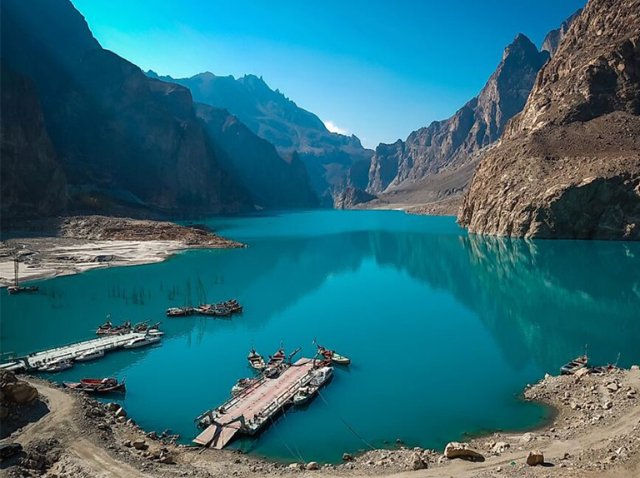
Boating on Attabad Lake is the activity most travellers remember from Hunza. The lake is bright turquoise, long and calm, and the boats run from the lakeside near Karimabad. A short ride takes you across the water with the valley walls on both sides, and the longer rides run up the lake towards Gulmit. Go in the morning, when the water is at its calmest and the light is best for photographs. Boats are shared or private, and the ride is easy for children and older travellers. It is the simplest way to start a Hunza trip, and it fits into half a day.
2. Visiting Baltit Fort
Baltit Fort, about 700 years old, stands on a hill above Karimabad, and visiting it is the best way to understand Hunza’s history. The fort was the home of the Mirs of Hunza, and inside you can walk through the old rooms and see how the valley’s rulers lived. The walk up from the Karimabad bazaar is short and steep, and from the roof the whole valley opens up: Karimabad below, the fields, and Rakaposhi in the distance on a clear day. Go in the late afternoon, when the light is warm and the crowds are thinner.
3. Visiting Altit Fort
Altit Fort is older than Baltit, built more than 900 years ago, and it sits on a cliff above the Hunza River. The fort has been restored, and the walk through it takes you past wooden balconies, old rooms and a small museum of Hunza history. Below the fort is Altit village, one of the oldest settlements in the valley, where you can walk the narrow lanes and see the old houses and the royal garden. The Kha Basi Cafe next to the fort is a good stop after the visit.
4. Standing under the Passu Cones
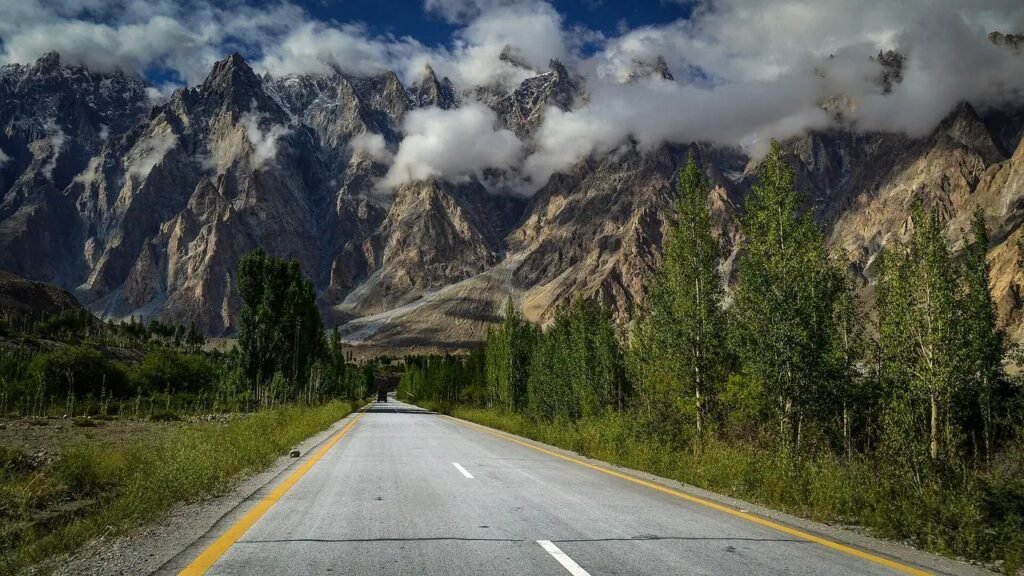
The Passu Cones are the sharp, pointed peaks that rise above the Karakoram Highway near Passu, and standing under them is one of the classic Hunza moments. The viewpoint is right by the road, so you can stop on the drive to Khunjerab Pass and walk a few minutes to the best spot. The cones look their best in the morning light, and in summer the fields below are green. It is a short stop, not a hike, so it fits into any day in upper Hunza. Keep the camera ready: the cones are one of the most photographed views in Pakistan.
5. Driving to Khunjerab Pass
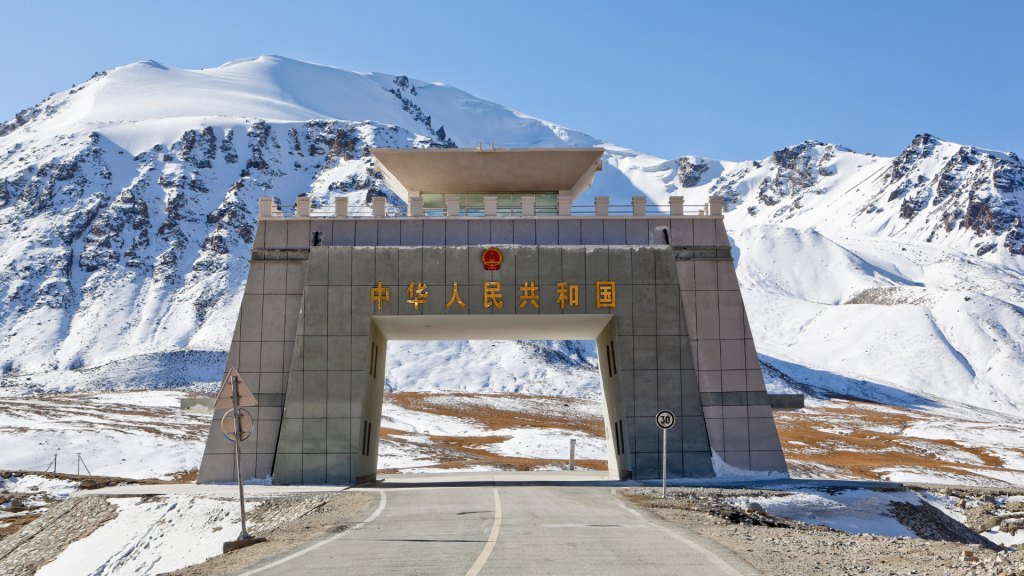
Khunjerab Pass is the highest paved border crossing in the world, at 4,693 metres, on the border with China. The drive from Karimabad runs along the Karakoram Highway, past Attabad Lake, Passu and Sost, and the road itself is part of the experience. At the top there is the border gate, snow-covered peaks and a wide, open plateau. The air is thin at 4,693 metres, so walk slowly, drink water and give yourself time at the top. It is a long day out from Karimabad, with stops on the way there and back.
6. Watching the sunrise from Eagle’s Nest (Duikar)
Eagle’s Nest is the hilltop viewpoint above Duikar village, and the sunrise from here is one of the best in Pakistan. The viewpoint sits at 2,858 metres above the valley. You head up before dawn and watch the first light hit Rakaposhi and the other peaks around the valley. Below, Karimabad and the fields are still in shadow, and the Hunza River winds through the valley floor. It is cold before sunrise, even in summer, so bring a warm layer. After the sun is up, Duikar village is a quiet place to walk before breakfast. The whole outing takes a morning, and it is worth the early start.
7. Crossing the Hussaini Suspension Bridge
The Hussaini Suspension Bridge hangs across the Hunza River near Passu, and crossing it is the most thrilling of the things to do in Hunza. The bridge is long, high above the river, and the wooden planks have gaps between them, so you walk it slowly, one step at a time, holding the cables. It is not for anyone who is afraid of heights, but for most travellers it is the highlight of the day in upper Hunza. Go in the morning, when the light is good and the bridge is quieter. The crossing takes only a few minutes, but take your time and watch your step.
8. Walking the Karimabad bazaar
Karimabad bazaar is the heart of Hunza, a short walk below Baltit Fort, and the best place to spend an unhurried afternoon. The shops sell apricots and dried fruit, turquoise jewellery, woollen caps and local handicrafts. You can stop for local food or a cup of tea between the shops, and the walk up to the fort starts from here. Walk slowly, look through the shops, and try the dried apricots. In the evening the bazaar fills up, and it is the liveliest place in the valley after dark.
9. Taking in the Rakaposhi viewpoint
Rakaposhi is the mountain that dominates Hunza, rising above the valley in a single sweep from the road. The best viewpoint is in Nagar Valley, across the Hunza River, where the mountain stands straight in front of you. On a clear morning the snow face is bright white against the sky, and in the evening the last light stays on the summit long after the valley is in shadow. It is a roadside stop: park, walk a few minutes, and give yourself time to take it in. It is best combined with the drive back towards Gilgit at the end of a Hunza trip.
10. Walking around Borith Lake and Gulmit
Borith Lake is a quieter lake than Attabad, below Passu near Gulmit, and a walk around it is the calmest of the things to do in Hunza. The lake is green, the mountains rise on both sides, and the path around it is flat and easy. Gulmit, the old capital of upper Hunza, is a short walk away, with old houses and poplar trees. Start in Gulmit, walk to the lake, and take your time along the shore. It is a good afternoon after the Passu Cones and the Hussaini Bridge, which are both nearby. There are no crowds here, and the evening light on the water is one of the best sights in upper Hunza.
Best time to visit Hunza
The best time for these activities is May to October. The valleys are green from late May and June, the weather is warm, and all the passes are open. September is good for sunshine, and the crowds are thinner than in the summer months. In winter, many of these activities are not possible in the same way: the days are short and cold, and the high roads are closed.
How many days do you need in Hunza?
Five days is enough for all 10 activities on this list: two days in Karimabad for the forts, the bazaar and the sunrise, two days in upper Hunza for the cones, the bridge and Borith Lake, and a day for the Khunjerab Pass drive. That is exactly what the 5-day Hunza Valley tour covers. If you have eight days, add Skardu, as the 8-day Skardu & Hunza tour does. Three days is enough for Attabad Lake, Baltit Fort, Altit Fort and the Karimabad bazaar, but you would miss upper Hunza.
Hunza tours from Lahore
The easiest way to do these activities is on a group departure from Lahore & Islamabad. Our two Hunza tours are:
- 5 Days Hunza Valley — Rs 27,500 per person, Rs 65,000 per couple. Groups of 5 to 22 travellers. Departs from Lahore.
- 8 Days Skardu & Hunza — Rs 40,000 per person, Rs 85,000 per couple. Groups of 5 to 22 travellers. Departs from Lahore.
See the 5-day Hunza Valley tour and the 8-day Skardu & Hunza tour for the full day-by-day plans.
Frequently asked questions
What are the best things to do in Hunza in one day?
Start with the Eagle’s Nest sunrise, then boating on Attabad Lake, Baltit Fort in the afternoon, and the Karimabad bazaar in the evening.
How many days do I need in Hunza?
Five days covers all 10 activities on this list. Three days is enough for Attabad Lake, Baltit Fort, Altit Fort and the Karimabad bazaar, but you would miss Passu, the Hussaini Bridge and Khunjerab Pass.
When is the best time to visit Hunza?
May to October. The valleys are green from late May and June, the weather is warm, and the passes are open.
Do I need to be fit to do these activities?
Most of these activities are easy: boating, the fort visits, the bazaar and the viewpoints need only short walks. The Eagle’s Nest sunrise is the only early start, and the Khunjerab Pass drive is a long day out. The bridge crossing needs a steady head for heights.
How much does a Hunza trip cost?
Our 5-day Hunza Valley tour is Rs 27,500 per person (Rs 65,000 per couple), and the 8-day Skardu & Hunza tour is Rs 40,000 per person (Rs 85,000 per couple). Both depart from Lahore & Islamabad. See the Hunza tour packages hub for details.
Ready to plan your Hunza trip? Send us your dates on WhatsApp and we will help you pick the tour that fits them best.